Sunday, October 31, 2010

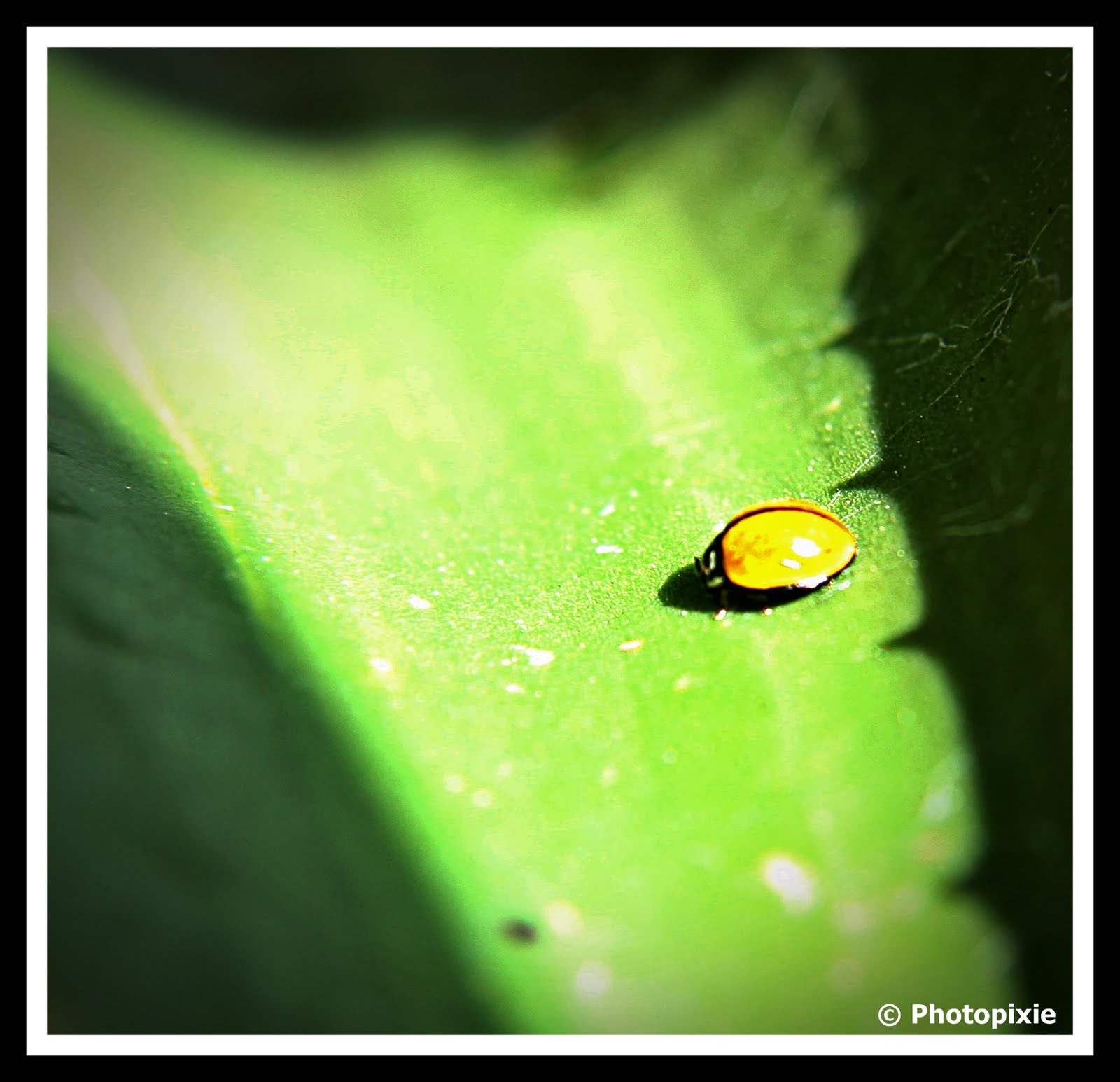
The Weevil

Weevils are a familiar sight in our garden, especially amongst some of the succulent plants, which they love to feast on.  For years the only weevil known to me was the wheat or granary weevil - so, imagine my surprise when I discovered that there are more than 40 000 species of weevils. 

I spotted the weevil walking along the paving in our backyard.  It must have felt threatened at some stage as it feigned death for a few minutes before taking off  again.


Thursday, October 14, 2010

Biennial Indian-Brazil-South African Maritime Exercise


The South African coast was abuzz with activity as warships from the navies of India, Brazil and South Africa joined forces to participate in the biennial Indian-Brazil-South Africa Maritime (IBSAMAR) exercise.

The aim of the two-week nautical exercise, which took place from 10 to 26 September 2010, was to increase interoperability and enhance military and diplomatic understanding amongst the navies of the participating countries.

Due to our geographical location it was decided that South Africa will be the host country for these exercises.  India was the leady navy for this edition the IBSAMAR.

These pictures were taken from the Humerail Shopping Centre during their visit to  the Port Elizabeth Harbour.  This is my first attempt at the tilt-shift effect - although I still need lots of practice to master the technique, I'm very happy with the results.

Saturday, September 18, 2010

Beached Humpback Whale (Maitland, Port Elizabeth)

On 15 September 2010 the carcass of a Humpback Whale approximately 12m in length washed up on the beach at Maitland in Port Elizabeth.  I took a drive down to the site on Saturday to snap some photos.  Needless to say, the carcass was in the first few stages of decompotion and that smell in the air was quite bad at times - so bad in fact, that upon arriving back at home, I immediately stripped off my clothes and took a second bath for the morning. 

As can be seen from the photo above, the tail of the whale was damaged - this could have been an injury caused by a large propeller. Also of interest are the throat or ventral grooves which run from the chin to the navel.Humpback Whales feed by taking in big amounts of water, all thanks to the troat grooves that expand, and filter krill, small shrimp-like crustaceans, and  small fish.  

Humpback Whales (Megaptera novaeangliae) belong to the baleen whale suborder.  The whales are well-know for breaching and the males sing the most beautiful and melodious 'song'.


The Humpback Whale can easily be identified by its stocky body, large pectoral fins with knobs on the front edge and humped dorsal fin. Another characteristic of the species is the small knobs (tubercles), which are actually hair follicles, decorating the edges of the upper jaw. 


The grown size of these whales are commonly 15–16 metres in males, 16–17 metres in females. The life expectancy of an individual is 45 - 50 years. The estimate age of the whale in these picture is 10 years.

Close-up Of  Barnacles On Pectoral Fin


Marking On Pectoral Fin
As I left, a local contractor arrived to bury the carcass and for a moment I was overcome by sadness as humans were once again responsible for the death of yet another majestic creature. However, nothing compares to the anger I feel for those countries who still see it fit to hunt them even though they are endangered!!!!


For more information on this beautiful mammal, go to http://en.wikipedia.org/wiki/Humpback_whale

Saturday, September 11, 2010

Oudtshoorn, The Ostrich Capital of the World

A few weeks ago I accompanied my hubby and three of his colleagues on a trip to Oudtshoorn, one of the largest towns in the Klein Karoo region of the Western Cape.  The town was named after Baron Pieter van Rheede van Oudtshoorn, who was appointed Governor of the Cape Colony in 1772.  Sadly, he died at sea on 23 January 1773 on route to Cape Town from Amsterdam, where he served as a member of the 'Verenigde Oos-Indiese Kompanjie'.


Travelling via the scenic route of the R62, I was stunned by the beauty of the clouds hanging low over the surrounding mountain range.  It took us approximately 3 hours to travel from Port Elizabeth, where we live, to Oudtshoorn.


Upon our arrival I immediately took to the streets camera in hand.  Although moderate in size, Oudtshoorn is a very 'church rich' town.  My first stop was the Dutch Reformed Church.  During 1857 the farm Hartebeesrivier was donated to the parish to build a new church.  Due to a lack of funds, construction was abandoned in 1863.  However, 13 years later construction resumed - all thanks to a boom in the ostrich industry.  The church, built from sandstone which was quarried locally, was finally completed in 1879.


The beautiful Presbyterian Church situated a few blocks from the Dutch Reformed Church was built in 1923.


Most people hate to pay a visit to a cemetery irrespective if its in broad daylight or at night.  I, on the other hand, love to visit the final resting place of many a soul.  It's the one place where I can sit for hours and just be at peace. Of course I would love to bump into a spirit or two, but for some reason they prefer to hide from me :(


The first two photos was taken at the main cemetery situated on a hill in Condor Street. There are a number of gates leading into the cemetery - each one indicates the name of a church denomination.  The last photograph was taken at an old cemetery located in the midst of town.


On our second day we woke up to find the Swartberg and Outeniqua mountains covered in snow!  What a beautiful sight it was!!!!!


Oudthoorn is home to the world's largest ostrich population with some of the best feathers, ostrich meat and leather products being produced in this region.  A visit to one of the ostrich breeding farms is a must.  There tourists get the opportunity to stand on ostrich eggs and even a chance to ride the largest bird in the world.

My visit to Safari Show Farm coincided with mating session - so  I was lucky enough to witness the mating dance first hand.


There is also an opportunity to visit the Ostrich Palace "Welgeluk" (Afrikaans for 'Good Fortune', which was built at the height of the feather boom in 1920.   The homestead is now a National Monument and the private residence of the Lipschitz family.
The tour ended with an "Ostrich Derby" with two jockeys displaying their riding skills. 

I can't wait for my next visit to this wonderful town - a visit to the Cango Caves will be my number one priority when I return.

Flora of the Klein-Karoo:


Sunday, August 15, 2010

The Coccinellidae Family - Lieveheersbeestje

One of the succulent plants in our garden has become a place of 'refuge' for aphids. Over the last couple of months I've discovered an abundance of life living off the colony of aphids.  I started taking photos only days after discovering the first few eggs of a bug that belongs to the Coccinellidae family.  Here is their story:

Fully Grown Ladybird

Coccinellids are predatory bugs that feed on aphids, mealybugs and scale insects.  Sometimes if there's a food shortage they will even feed on the eggs and larvae of moths and other insects.  The bright colours of the elytra, which  protect the flight wings underneath, serve as a warning to potential predators that  diner will leave a bad tast in their "mouths" if they feast on it.  Ladybirds can secrete a fluid from the joints in their legs which gives them a foul taste.

Ladybird Feeding On A Larva.
Ladybird Feeding On A Mealy Bug
Brightly Coloured Eggs

When possible, mating will always take place close to a colony of aphids.   The yellow eggs are only about a millimeter in length and spindle shaped. Six-legged larvae emerge from the eggs within 3 - 5 days.  As soon as they hatch, they consume as many aphids as they can - up to almost 20 per day!!!  It uses its sharp jaws to crush the aphid's body and sucks out the juices.

Alligator-like Larva

Once the larva has reached full size, it will attach itself to a leave or stem of a plant.  A split will appear along its backside to expose the pupa underneath. After a few days a lady bug will emerge - the spots on the elytra will only appear after approximately 24 hours.

'Brand Spanking New' Ladybird
I have not been able to capture all the phases of  this amazing insect's life cycle on 'film'  - hopefully with the number of aphids in our garden, this will soon be rectified.

Monday, August 9, 2010

Itsy Bitsy Spiders

Grass Huntsman Spider
Pseudomicrommata longipes
Don't ask me why, but the mere sight of a spider strikes terror in my heart!  In actual fact I HATE SPIDERS!!!! Occasionally I put on a brave face just to take a photo.... but God forbid if the spider moves - that's normally when I shriek like a banshee and run for the hills! Give me snakes any day, but spiders... that's a total different story!


Common Jumping Spider
Baryphas sp.

Flattie or Wall Spider
Selenops sp.


Discovered this 'cutie' on a succulent plant.


After discovering this 'cutie' I tried to identify it by doing several searches on the internet.  Unfortunately, I was not very successful - until I came across the website for the Spider Club of Southern Africa.  My e-mail requesting assistance in identifying this specimen was quickly responded to by Joan Faiola and here is what she had to say:

"It is an ant-mimicking spider in the jumping spider family Salticidae.    If you were able to look at the spider under magnification you would see the typical very large eyes of a jumping spider.  Its genus name is Myrmarachne.  You will note that it holds its front legs up to pretend that they are antennae, and that its body shape looks ‘antlike’ and appears to have three body segments, which of course it doesn’t because spiders only have two. 

There are a number of spider families with ant-mimics, including certain sac spider families and genera.  We are not really sure why they mimic ants – the two main hypotheses are that they either prey on ants, and can move around with them undetected, or they avoid being preyed upon themselves by appearing to be ants, which are often distasteful to predators because of formic acid."
According to Joan the spider in the photo above is a male  - just look at its very long jaws.  Apparently they use the long jaws to grasp the female.
 
For more information on the Spider Club of Southern Africa, please visit www.spiderclub.co.za 

Ant-mimicking spider (female)


I found this quote on the internet: "The only thing we have to fear is fear itself.... and spiders!"  ;-D 

One day I WILL overcome my fear of spiders - just like I did with scuba diving in the big blue ocean. 

Mentioning the word 'diving' just reminded me of an incident that happened some time ago after battling heavy surge at a site called Bell Bouy.  On my return to the boat the Divemaster pointed out that an orange sea spider ascended with me and was now happily sitting on my BC.   I almost hyperventilated! To tell the truth it was no bigger than a R2 coin and it looked very fragile.  After a show and tell it was quickly returned to the ocean where it hopefully still lives today! 

Saturday, August 7, 2010

Withering Winter Beauty

Dried coral bell of the withering Kalanchoe plant in our garden...

Reminiscence of winter

If only this was a magic mushroom...


Clump of moss growning in a river-bed.